
Ebola Virus Disease Symptoms And Signs 2026: Is Ebola in the US Right Now ?

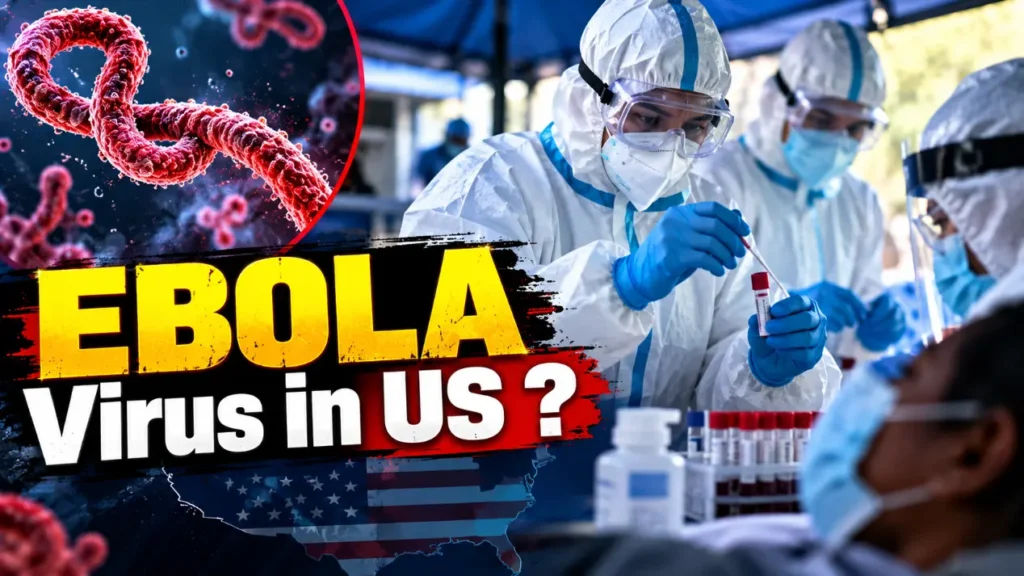
As of October 22, 2026, the US Centers for Disease Control and Prevention (CDC) reports no cases associated with the current Ebola outbreak in the United States. The CDC says the risk to the American public and travelers remains low. However, the international outbreak continues to require close monitoring. CDC’s latest outbreak update provides the current US risk assessment.
Understanding Ebola virus disease symptoms and signs can help people recognize when medical advice may be necessary. Early symptoms can resemble common illnesses, including influenza and malaria, so symptoms alone cannot confirm Ebola. A person’s exposure history is also important.
What Is Ebola Virus Disease?
Ebola virus disease is a severe infectious illness caused by viruses in the Ebolavirus group. It can cause serious illness and death, and it requires prompt medical assessment when infection is suspected.
Ebola can spread through direct contact with the blood or body fluids of an infected person who is sick or has died, as well as through contaminated objects such as needles. People do not generally transmit Ebola before symptoms begin. It is not spread through casual contact with someone who is not infected.
The 2026 outbreak discussed in current international reports is caused by Bundibugyo virus, which causes Bundibugyo virus disease. It is a distinct disease-causing virus within the Ebolavirus group. This distinction matters when interpreting outbreak reports and case counts.
Source: WHO — Ebola Disease Fact Sheet
Ebola Virus Disease Symptoms and Signs
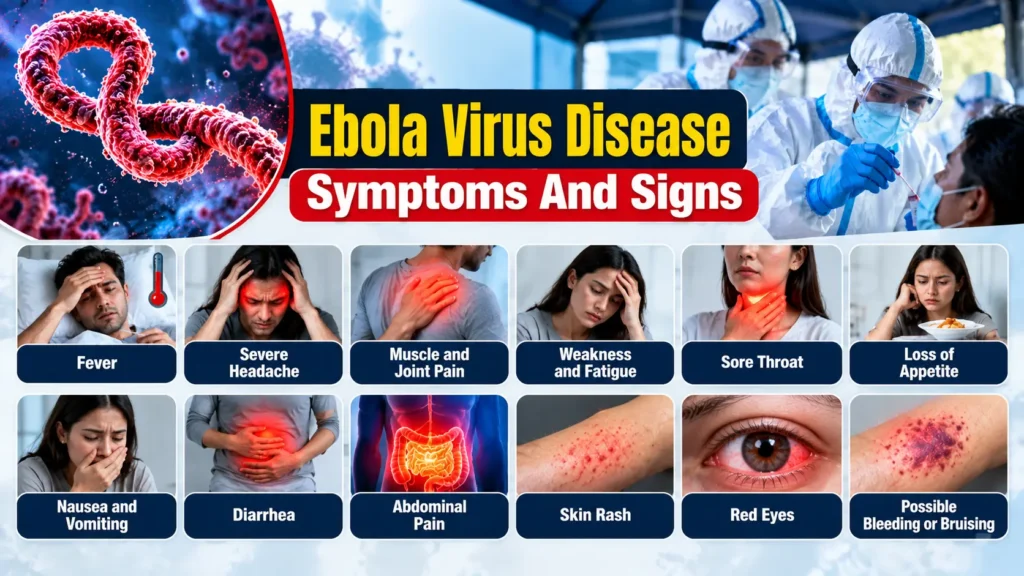
The symptoms of Ebola virus disease can begin suddenly. Early signs are often nonspecific, meaning they can resemble other infections. As the illness progresses, gastrointestinal symptoms and other complications may develop.
| Stage | Symptoms and signs |
|---|---|
| Early symptoms | Fever, severe headache, muscle and joint pain, weakness, fatigue, sore throat and loss of appetite |
| Later symptoms | Vomiting, diarrhea, nausea and abdominal pain |
| Other possible symptoms | Red eyes, skin rash, chest pain, shortness of breath, confusion, hiccups or seizures |
| Possible bleeding | Unexplained bleeding or bruising may occur, but bleeding is not present in every case |
Source: CDC — Signs and Symptoms of Ebola Disease
What Are the Early Ebola Virus Symptoms ?
Early Ebola virus symptoms may include fever, weakness, fatigue, muscle aches, joint pain and a severe headache. Some people may also experience a sore throat or loss of appetite.
These symptoms are not unique to Ebola. Other infections can produce similar signs, and a person should not assume they have Ebola based on symptoms alone.
The possibility of Ebola is more concerning when compatible symptoms occur after a relevant exposure, such as direct contact with an infected person’s body fluids or contaminated materials.
For More Visit : https://us360news.com/
What Are the Later Symptoms of Ebola ?
As the illness progresses, a patient may develop vomiting, diarrhea, nausea and abdominal pain. Other possible symptoms include a rash, red eyes, chest pain, breathing difficulties or confusion.
Some patients develop unexplained bleeding, but the presence of bleeding is not required for an Ebola diagnosis. Waiting for bleeding before seeking help would be unsafe if a person has a credible exposure and compatible symptoms.
Ebola Virus Symptoms Timeline: When Do Symptoms Start ?
Ebola symptoms generally appear 2 to 21 days after exposure. The CDC says symptoms begin, on average, around 8 to 10 days after exposure.
The timeline varies between individuals. A person may initially experience general symptoms such as fever, fatigue and aches before developing gastrointestinal symptoms or other complications.
The timing alone cannot confirm or rule out infection. If someone has had a possible exposure and develops compatible symptoms during the 21-day period, they should contact a healthcare provider or public health department immediately and explain the exposure before arriving in person.
Source: CDC — Signs and Symptoms of Ebola Disease
Is Ebola in the US Right Now? Latest Cases and Risk
As of October 22, 2026, the CDC’s October 20 update reported no US cases associated with the current outbreak. The agency assessed the overall risk to the American public and travelers as low.
The outbreak is occurring primarily in the Democratic Republic of the Congo (DRC), with cases also reported in other countries. International spread and imported cases require public health monitoring, but they do not mean that Ebola is circulating widely in the United States.
The CDC says the likelihood of the outbreak spreading to the United States is very low. It also assesses the risk of further spread within the country as low if a case were diagnosed, because of public health preparedness and infection-control measures.
For the latest status, consult the CDC’s official Ebola outbreak situation page. Case counts and risk assessments can change as investigations progress.
How Many Ebola Cases and Deaths Have Occurred in the US ?
The United States has treated Ebola patients in the past, particularly during the 2014 West Africa outbreak. According to the CDC, 11 people were treated for Ebola virus infection in the United States during that outbreak, and two died.
Most were infected outside the United States and brought to the country for treatment or arrived as travelers. Two nurses who cared for an infected patient contracted Ebola in the United States; both recovered.
These are historical figures, not the number of cases associated with the 2026 outbreak.
Source: CDC — History of Ebola Outbreaks
When Was the Last Case of Ebola in the US ?
The historical CDC record includes US treatment cases during the 2014 outbreak, as well as later outbreak responses internationally. The current outbreak update does not report any associated US cases as of October 20, 2026.
The phrase “last case” can refer to a patient diagnosed in the country, a patient infected locally, or someone brought to the United States for treatment. These are different measures. The available outbreak update establishes the current situation but should not be interpreted as a complete record of every historical Ebola-related medical event in the country.
What Is Behind the Ebola Outbreak in 2026 ?
The 2026 outbreak is caused by Bundibugyo virus and is centered in the Democratic Republic of the Congo. International health authorities are tracking cases, deaths, cross-border transmission and contacts of infected people.
In its October 20 update, the CDC reported 9,582 confirmed cases and 4,605 confirmed deaths across the countries included in its outbreak summary, based on data available as of October 20, 2026. These are international outbreak figures, not US case counts. The figures are subject to change as authorities verify reports and investigate additional cases.
The CDC’s update includes the Democratic Republic of the Congo, Kenya, Uganda and France in its country-level summary. For current details and revisions, readers should consult the CDC outbreak report and the WHO’s outbreak reporting.
How Does Ebola Spread, and Can You Get Ebola in the US ?
Ebola can spread through direct contact with the blood or body fluids of a person who is sick with or has died from the disease, or through contaminated objects. Exposure can also occur when providing care without appropriate infection-control precautions.
A person cannot catch Ebola simply by reading about an outbreak or being in the same country as an outbreak. The level of risk depends on the type of exposure and the circumstances.
It is possible for a person infected abroad to travel to the United States before being diagnosed. That is different from sustained community transmission. The CDC’s current assessment says no cases associated with the 2026 outbreak have been reported in the United States, and the risk to the general public remains low.
When Should Someone Seek Medical Care ?
Anyone who believes they may have been exposed to Ebola and develops compatible symptoms should contact a healthcare provider or state or local public health department immediately.
Call ahead before visiting a clinic, emergency department or other healthcare facility. Explain the possible exposure and symptoms so staff can give instructions and arrange appropriate precautions.
Fever, headache and fatigue are common symptoms of many illnesses, so they do not automatically mean someone has Ebola. However, a credible exposure combined with compatible symptoms needs prompt professional assessment.
For official guidance, visit the CDC’s Ebola signs and symptoms page.
Frequently Asked Questions
What are the main symptoms of Ebola virus disease ?
Common symptoms include fever, severe headache, muscle and joint pain, weakness, fatigue, sore throat and loss of appetite. Later symptoms may include vomiting, diarrhea and abdominal pain. Bleeding can occur but is not universal.
Is Ebola in the US right now ?
As of the CDC’s October 20, 2026 update, no cases associated with the current outbreak had been reported in the United States. The CDC assessed the risk to the American public and travelers as low.
How many people died from Ebola in the US ?
During the 2014 West Africa outbreak, 11 people were treated for Ebola virus infection in the United States, and two died, according to the CDC.
Can you get Ebola in the US ?
Yes, an infected person can be diagnosed or treated in the United States, and limited transmission has occurred in the past. However, the CDC reported no cases associated with the current outbreak in the United States as of October 20, 2026.
How common is Ebola in the US ?
Ebola is rare in the United States. The CDC’s historical record includes 11 people treated during the 2014 outbreak, and the agency’s October 2026 update reported no US cases associated with the current outbreak.
What causes Ebola virus disease ?
Ebola virus disease is caused by viruses in the Ebolavirus group. The current 2026 outbreak is caused by Bundibugyo virus, which causes Bundibugyo virus disease.
How long after exposure do Ebola symptoms appear ?
Symptoms generally appear 2 to 21 days after exposure, with an average onset around 8 to 10 days. Anyone with possible exposure and compatible symptoms should seek prompt medical guidance.
Does Ebola always cause bleeding ?
No. Bleeding can occur, but it is not present in every case. Other symptoms, including fever, weakness, headache, vomiting and diarrhea, can occur.
What is the difference between Ebola virus disease and Bundibugyo virus disease ?
Both are diseases caused by viruses within the Ebolavirus group, but they are caused by different virus species. The 2026 outbreak described in current reports is specifically caused by Bundibugyo virus.
Sources
- CDC — Ebola Outbreak: Current Situation
- CDC — Signs and Symptoms of Ebola Disease
- CDC — History of Ebola Outbreaks
- WHO — Ebola Disease Fact Sheet
- WHO — Ebola Disease Caused by Bundibugyo Virus: Democratic Republic of the Congo
- National Institute for Communicable Diseases — Bundibugyo Virus Disease Updates
Medical information disclaimer: This article is for informational and educational purposes only and is not a substitute for professional medical advice, diagnosis or treatment. For current guidance, consult official public health authorities and a qualified healthcare professional.
